
The one where comedy became the primary artform.
CRAFT, the Comedy Representation & Artform Trust, is the first dedicated national body for the entire comedy industry ecosystem, spanning live, broadcast, recorded, digital, visual/illustrative, and the surrounding businesses—and the public they serve. It is Secretariat of the Comedy APPG and a Charitable Incorporated Organisation (CIO) in formation and exists to give comedy the infrastructure, policy representation, and professional support long afforded to other industries, including music, theatre, and sport.
-
CRAFT—Comedy Representation & Artform Trust—is a UK Charitable Incorporated Organisation (CIO in formation), established for the public benefit.
CRAFT is the UK’s comedy industry body, building the institutional infrastructure necessary to treat comedy as a primary, standalone artform.
Comedy is a uniquely interconnected sector. CRAFT therefore serves the entire comedy ecosystem, spanning live, broadcast, recorded, digital, visual/illustrative, and the surrounding businesses:
to widen access,
develop sustainable pathways,
set standards and safeguarding,
defend freedom of artistic
expression and inclusion, and
build the evidence base that unlocks public and private investment.
-
CRAFT has been created by a large team of passionate thinkers working with committed industry professionals and comedy talent.
Our founding team brings together well-known comedy and political patrons, alongside trustees and advisors spanning comedy, business, healthcare, education, technology, policy, and more.
We look forward to supporting the sector and working with government and institutions at every level.Visit our Team page for more information or to get in touch.
-
CRAFT’s focus is practical and outcomes-led.
💡SECURE formal recognition and policy inclusion for comedy as a standalone artform and sector.
💡RAISE standards, safeguarding and professionalism.
💡Protect lawful satire and freedom of artistic expression, while widening access and inclusion.
💡ACHIEVE sustainable public funding and private investment/contribution pathways, across the entire sector, through the CRAFT Comedy Levy.
DISCOVER VERIFIED Comedy AWARDS & Funding Opportunities
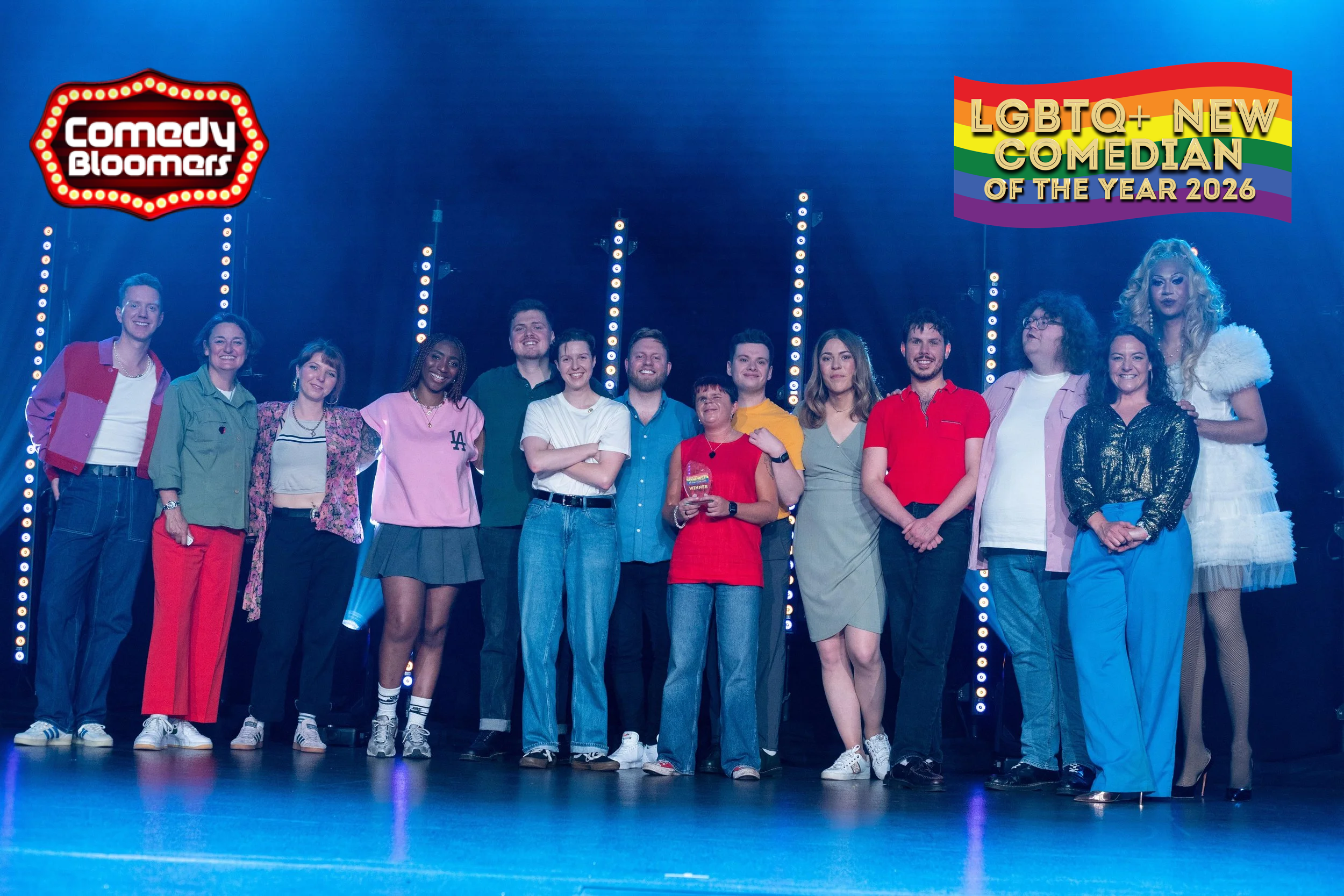





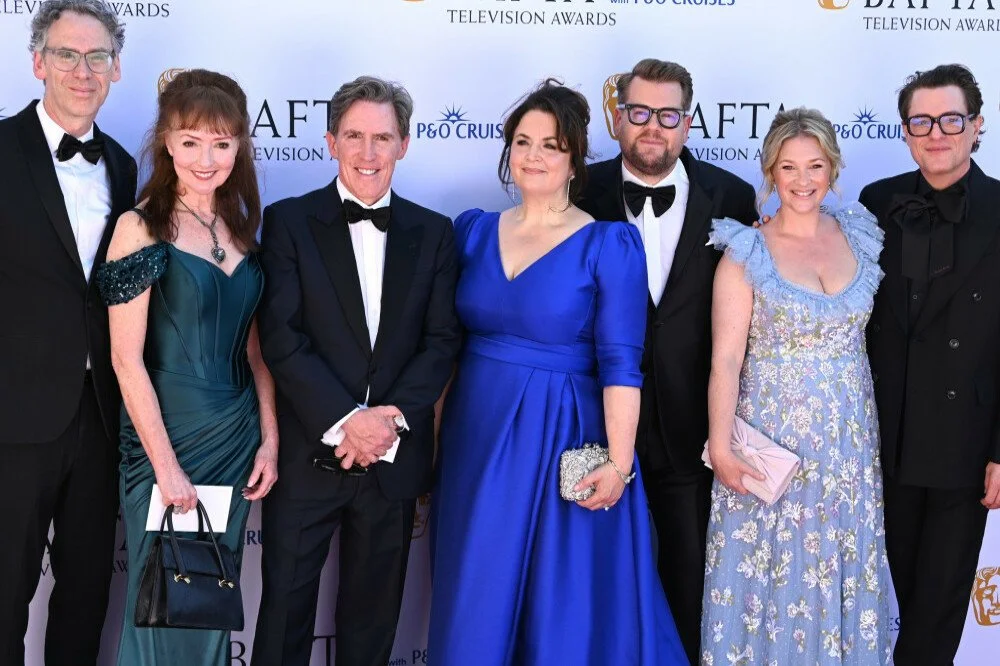
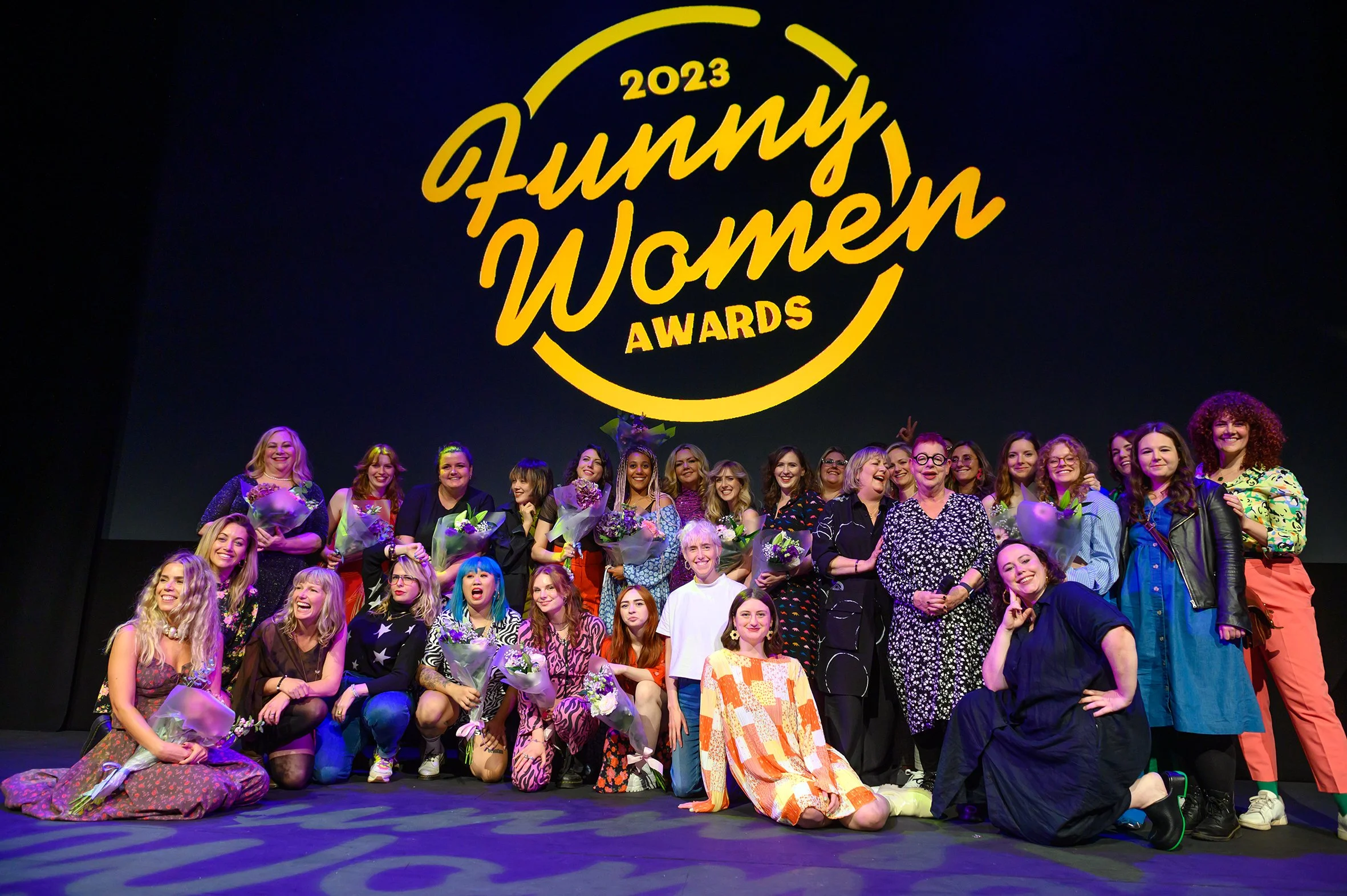
Grants, prizes, bursaries, glory. CRAFT tracks down verified opportunities in comedy — from your first £500 to your first BAFTA. Spotted a gap? Email us.
Meet CRAFT’s founding team.
CRAFT BRINGS OVER 300 years of combined comedy industry experience
CRAFT has been created by a large team of passionate thinkers working with committed industry professionals and comedy talent.
Our founding team brings together well-known comedy and political patrons, alongside trustees and advisors spanning comedy, business, healthcare, education, technology, policy, and more.
Some of us are hilarious; others not ;). We are all comedy fans with the skills and expertise to help the industry. We believe our support will onwards help communities and audiences to make the world a happier place.
CRAFT on Instagram
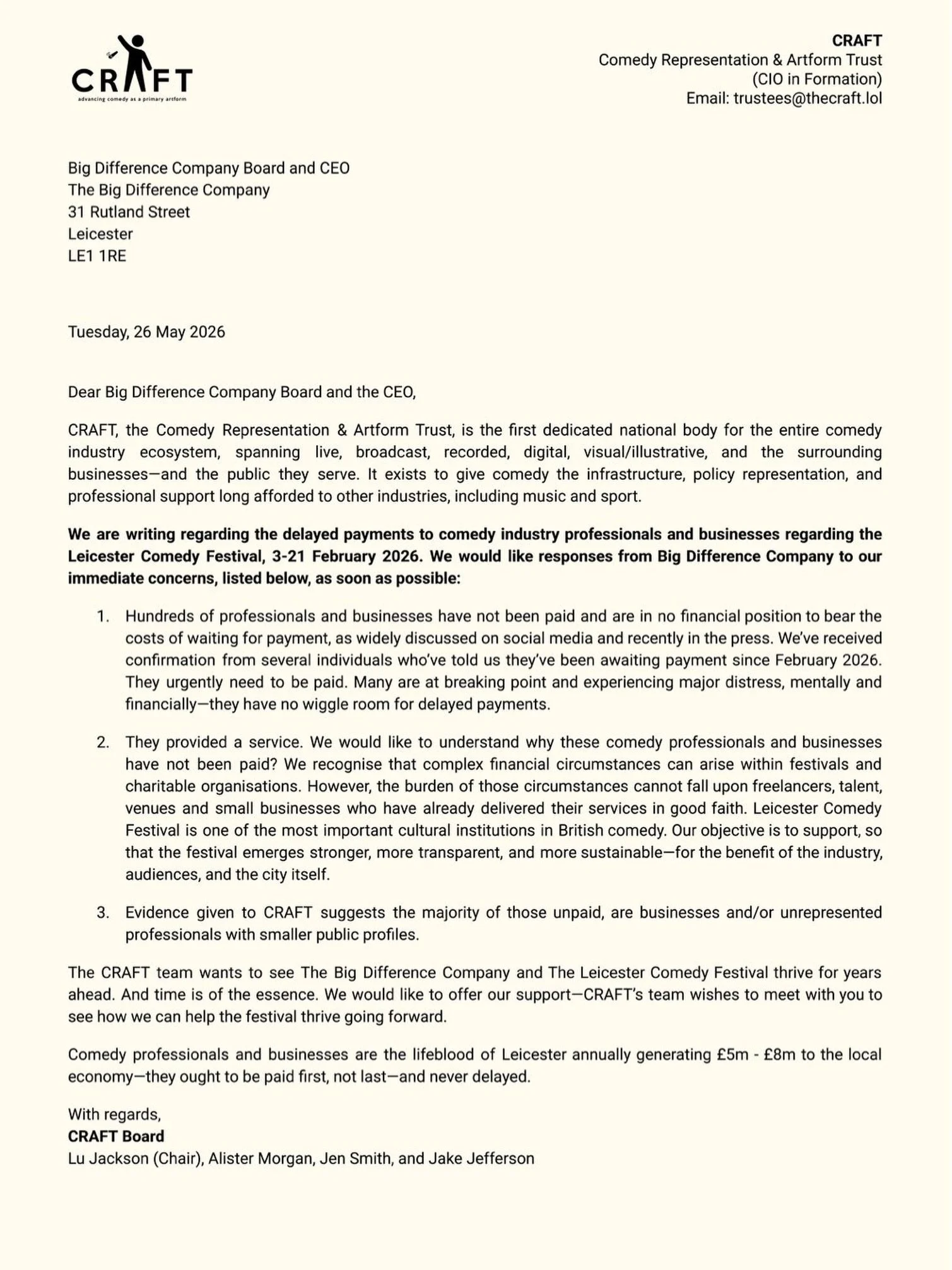
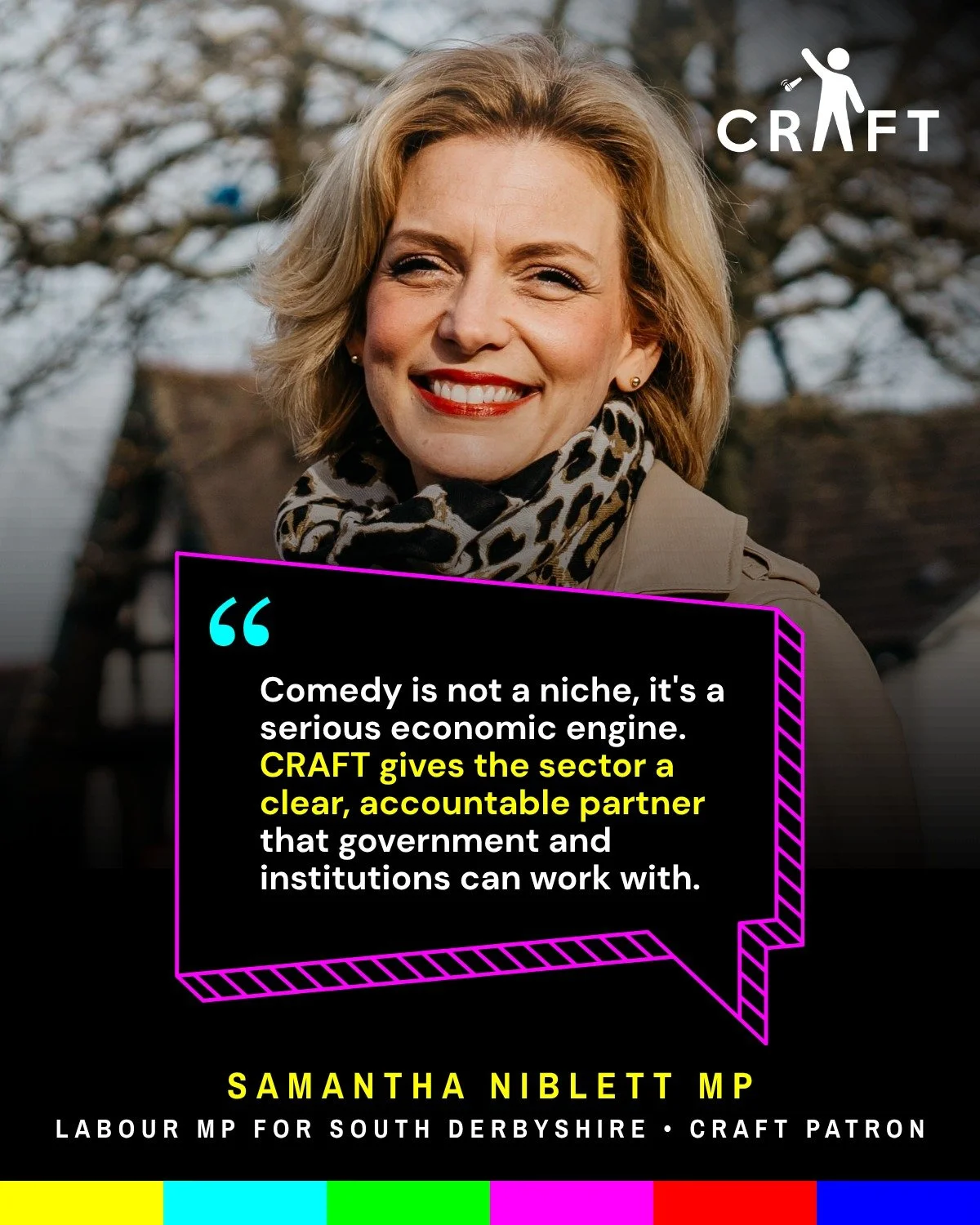
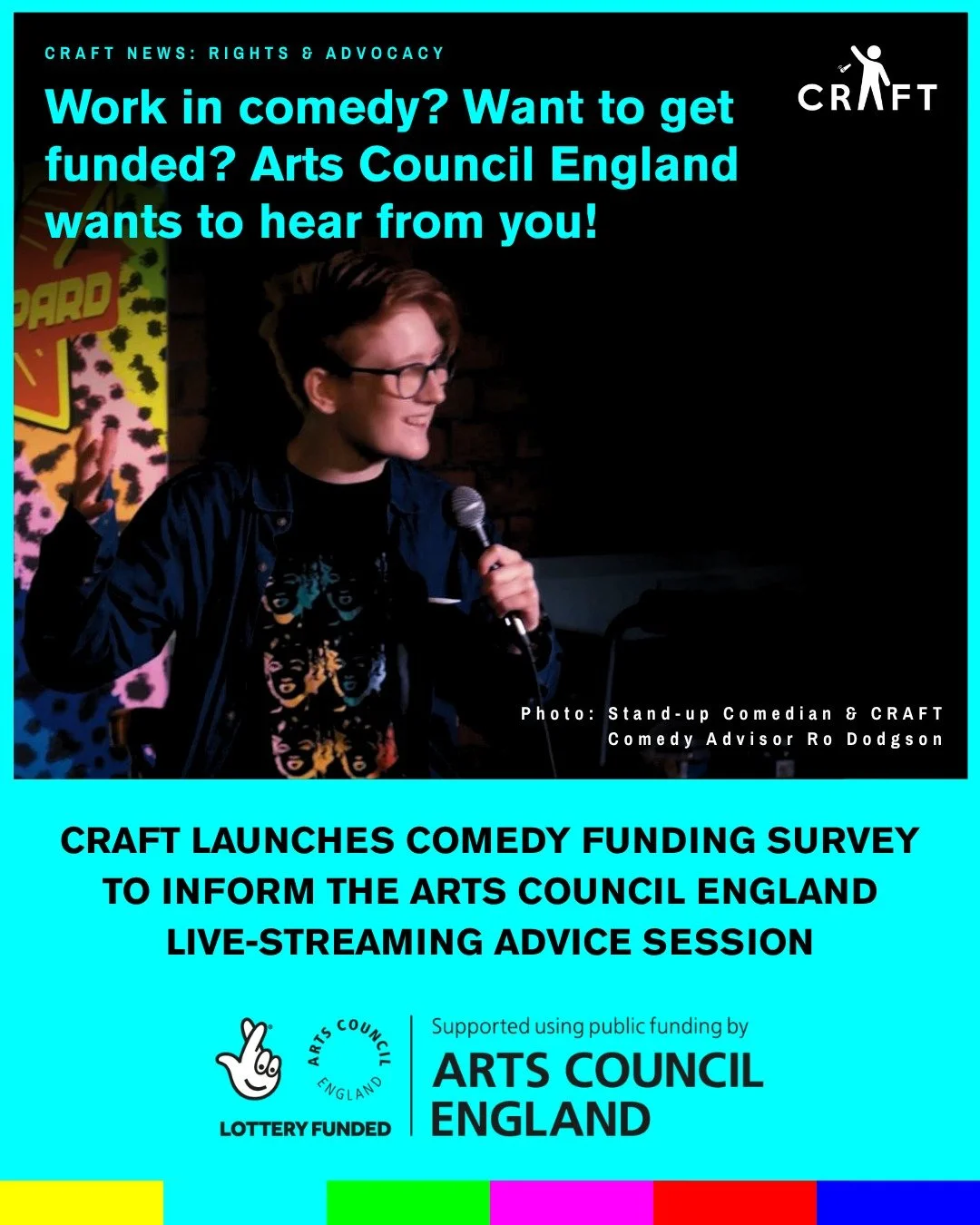
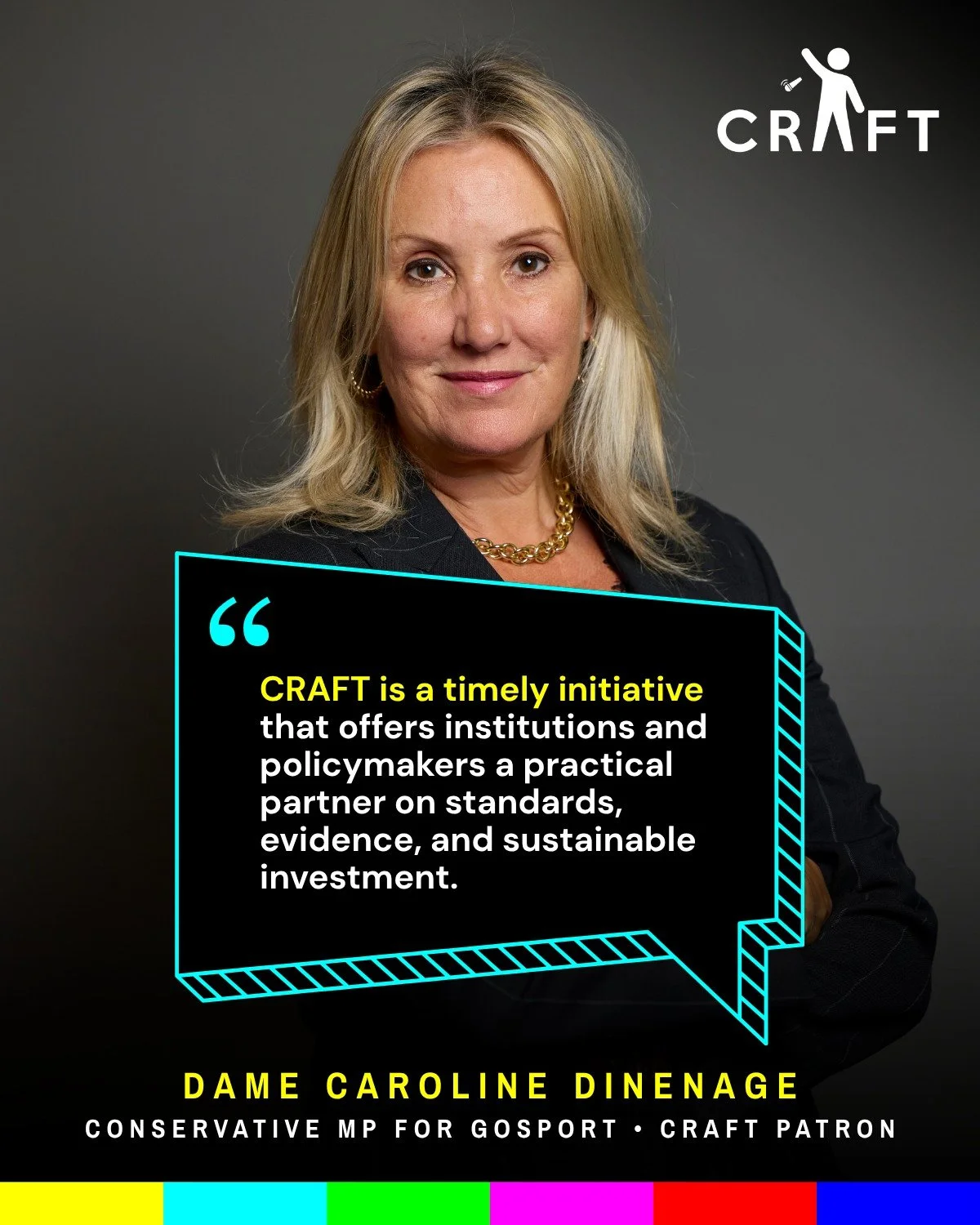
CRAFT’s Five Pillars
CRAFT’s Five Pillars supports comedy where it is the primary artform, spanning the entire ecosystem, spanning live, broadcast, recorded, digital, visual/illustrative, and the surrounding businesses.
01
01 — RIGHTS & ADVOCACY
Artform, Access & Grassroots Development
Make comedy easier to access, champion creativity, and strengthen grassroots pathways across the entire ecosystem.
02
02 — LAUGHTER AS MEDICINE
Community Health & Wellbeing Delivery
Support and fund practitioners to use comedy and laughter-led experiences to strengthen wellbeing and social connection.
03
03 — CERTIFIED PUBLIC REGISTRY DIRECTORY
Standards, Safeguarding, & Accountability
Create shared expectations for safe, fair and professional comedy activity—so people can work, book, and participate with confidence.
04
04 — RIGHTS & ADVOCACY
Public Affairs, Policy, & Representation
Ensure comedy is recognised as a standalone artform across all formats so policy decisions and funding reflect its true role and value.
05
05 — EVIDENCE TO INNOVATION
Research, Education, & InnovatioN
Grow evidence for cultural, social and economic value; create guidance, training and investment; champion innovation.
★
☆ — SUPPORT COMEDY
THE COMEDY LEVY FUNDS THE 5 PILLARS
CRAFT is building infrastructure through The Comedy Levy, to fund and support the entire ecosystem of the sector.
One wears many hats in Comedy—it’s an interconnected industry.
For example, talent (like stand-up comedians) largely perform, write, produce, and direct—across live, broadcast, recorded, digital and print formats (for example: clubs/festivals, TV/radio, film/podcasts, socials, and books).
CRAFT therefore takes a view to support this interconnectedness and the entire comedy ecosystem.
What is CRAFT?
Craft is the national body for comedy, with sustainable solutions.
CRAFT supports the entire comedy ecosystem to maximise opportunities and innovation, widen access, set standards, defend freedom of artistic expression, and build the evidence base that unlocks investment—meaningfully, transparently, and sustainably.
As a vital part of British and international cultural, social, and economic life, CRAFT’s ultimate goal is to:
protect its professionals and businesses,
strengthen audience and community access, and
enable comedy to thrive and sustain in the (AI) years ahead.
As a brand new body for the sector, CRAFT will deliver this infrastructure in stages.
Phase 1
We start by focusing on creating processes to ensure effective practice and transparency, specifically through the Five Pillars, the CRAFT Certified Public Register Directory, The Comedy Levy, and a sector consultation on standards and immediate industry funding needs.
As of launch, CRAFT is ready to receive both restricted and unrestricted funds to The Comedy Levy, backed by Charity Commission transparency standards and donor gift aid status.
CRAFT will deliver structural support across the Five Pillars, including to distribute funds from The Comedy Levy across the sector ecosystem.
This phase will involve government and key institution consultations and collaboration to include comedy within national frameworks, so the industry is recognised, and funding and support can start to flow into the ecosystem.
Phase 2
We will pilot and prove new models before expanding into monitoring/assurance, funding programmes, research publication, and long-term infrastructure as we scale.
Why CRAFT?
Do you know Comedy HAS BEEN the only major CREATIVE INDUSTRY without a national body?
Comedy shapes our culture and identity. The sector is made up of thousands of individuals and businesses who generate billions in revenue and millions in taxes annually. Comedy delivers evidence-based public health benefits and and contributes significantly to other industries, including tourism and exports. Despite this, reinvestment is nowhere near proportionate to the value it creates.
Comedy is systemically underfunded and institutionally overlooked.
Comedy does not have any sector-specific members on the Creative Industry Council (CIC), who crucially oversee key government funding, consultations, and reports. The word ‘Comedy’ is systemically missing from all key DCMS reports—like the Creative Industry Sector Plan (and tech/AI).
Comedy is not a standalone artform with Arts Councils (England, Ireland, Scotland, Wales).
Comedy is not yet integrated into NHS creative health policy.
The creative industries highly value inclusion.
Yet Comedy is excluded. When there’s a crisis or fundraising help requested, Comedy always turns up to support. But who supports Comedy?
This lack of high-level structure means investment is minimal and does not trickle downstream, like it does for other creatives industries and sport.
Funding to Comedy—for decades—has been extremely limited from government, key institutions, organisations, and high-net individuals and businesses. Public donations are scarce.
This predominantly impacts grassroots professionals and businesses—stifling opportunities and innovation—resulting in a less interesting and funny future for British comedy.
It leads to a future where increasingly only people with financial support or wealth will be able to enter the sector, which is a dramatic shift from its working-class and peasant routes.
The urgency of this situation, is exacerbated in a post COVID-19, AI-era.
However, it begs the question—even if Comedy was to be funded, how? And to who? And where? The industry hasn’t had a dedicated body that investment and opportunities can flow through at scale.
Downstream examples…
‘Comedy’ was not listed as a specific category in the Arts Council Review (2025). ‘Comedy’ is not listed as a category for grant applications with UKRI and local council websites.
This exclusion means the industry does not participate in major government and insituion reports, resulting in a lack of tracking and accountability, and ultimately funding and support.